7 Myths About Buying Residential Property in Navi Mumbai — Busted
Navi Mumbai has evolved into a prominent residential and commercial hub, drawing significant attention from homebuyers and investors alike. Its planned infrastructure, connectivity, and sustained development trajectory present a compelling proposition for those seeking a modern urban lifestyle. However, as with any large and dynamic real estate market, certain misconceptions can emerge, influencing perceptions and sometimes leading to misinformed decisions regarding property acquisition. This article aims to address and clarify seven common myths people often encounter when considering buying residential property in Navi Mumbai, offering a clearer, more accurate perspective based on current market realities.
Myth 1: Navi Mumbai is Just an Extension of Mumbai, Lacking Its Own Identity
A frequent perception is that Navi Mumbai functions merely as a residential overflow for Mumbai, without a distinct character or independent growth. This view overlooks the careful planning and self-sufficient development that has defined Navi Mumbai since its inception in the 1970s. It was conceived as a counter-magnet to Mumbai’s increasing population density, designed with its own distinct economic centers, residential zones, and infrastructural backbone.
Navi Mumbai boasts well-defined nodes like Vashi, Nerul, Belapur, Panvel, and Ulwe, each with unique characteristics and amenities. CIDCO (City and Industrial Development Corporation) has played a pivotal role in shaping this region, ensuring systematic development across various sectors, including housing, transport, education, and healthcare. For instance, the presence of major educational institutions, corporate parks, and international exhibition centers within Navi Mumbai itself attests to its economic independence. The upcoming Navi Mumbai International Airport, alongside existing robust road and rail networks, further strengthens its position as a self-sustaining metropolitan area. The vibrant social infrastructure, including numerous shopping malls, multiplexes, and recreational facilities, fosters a strong sense of community and provides residents with a complete urban experience, independent of Mumbai’s offerings. Therefore, considering Navi Mumbai to be just a satellite town overlooks its intrinsic value and potential.
Myth 2: Property Prices in Navi Mumbai Are Exorbitantly High, Making Homeownership Unattainable
While property values in Navi Mumbai have appreciated steadily over the years, a common myth suggests that they are largely out of reach for a significant portion of the homebuying public. This perspective often stems from comparing prices in prime Mumbai areas to Navi Mumbai’s more established nodes, without considering the wide spectrum of options available across the region.
Navi Mumbai offers a diverse range of housing segments, catering to various budget allocations. While areas like Vashi or Nerul might have commanded higher prices historically, emerging nodes such as Ulwe, Dronagiri, and Panvel present more affordable entry points for homebuyers. These areas are undergoing rapid infrastructure development, promising future appreciation. Factors like proximity to the upcoming airport, dedicated economic zones, and enhanced connectivity contribute to their growing appeal. Furthermore, government initiatives and bank lending policies often provide advantages for flats in Navi Mumbai, making the financial aspect more manageable. Developers are also offering various configurations and payment plans, including compact apartments in Navi Mumbai that align with different budgetary constraints. Therefore, it is inaccurate to generalize property prices as uniformly prohibitive across the entire Navi Mumbai region. A careful exploration of different localities and property types can reveal numerous attainable homeownership opportunities. For example, considering options in areas undergoing active development can often provide a more accessible entry into the market.

Myth 3: Buying Under-Construction Property is Always Better Than Ready-to-Move Options
There’s a prevailing notion that investing in an under-construction property is inherently superior due to lower initial costs and the potential for greater appreciation by the time of possession. While under-construction properties can offer certain financial advantages, especially for long-term investors or those with flexible timelines, this isn’t universally true. The “better” option is highly dependent on individual circumstances, financial readiness, and risk tolerance.
Ready to move flats offer immediate possession, eliminating the waiting period and the uncertainty associated with project delays, which can sometimes occur despite RERA regulations. For those who need to move in quickly, perhaps due to relocation or expiring leases, a ready property is often the more practical choice. Furthermore, with ready-to-move options, what you see is what you get, allowing for a thorough inspection of the actual unit, common areas, and amenities before purchase. This reduces the scope for discrepancies between promised features and the delivered product. While the initial investment might be slightly higher, the certainty of immediate occupancy, absence of rental outgo during construction, and avoidance of potential construction cost escalations (though less common under RERA) are significant benefits. For example, purchasing a ready property means you can begin furnishing and living in your new home without delay, translating into tangible savings on rent and associated relocation costs. Therefore, to say that under-construction is always better oversimplifies a complex decision, and both options have distinct advantages depending on the buyer’s specific needs.
Myth 4: Infrastructure Development in Navi Mumbai is Slow and Doesn’t Justify Current Prices
This myth often suggests that the pace of infrastructure development lags behind the rate of property price appreciation, implying that current prices are not fully supported by existing facilities. However, a closer look at Navi Mumbai’s trajectory reveals a consistent and ambitious plan for infrastructural growth, meticulously executed by various authorities including CIDCO, NMMC, and MMRDA.
The region is a hub for large-scale infrastructure projects that are either completed, underway, or planned, significantly enhancing connectivity and urban facilities. Key examples include the Navi Mumbai International Airport, which is set to transform the region’s economic and logistical landscape. The Mumbai Trans Harbour Sea Link (MTHL), also known as Atal Setu, has dramatically reduced travel time between Navi Mumbai and South Mumbai, opening up new corridors for development and commuting convenience. Furthermore, the extensive network of suburban railways, expressways, and internal arterial roads ensures smooth transit within Navi Mumbai and to other parts of the Mumbai Metropolitan Region (MMR). Development projects also encompass social infrastructure, with new schools, hospitals, recreational spaces, and commercial centers continuously being added across various nodes, particularly in growth areas like Ulwe and Panvel. For instance, the planned expansion of the Metro network within Navi Mumbai will further enhance intra-city connectivity. This proactive approach to infrastructure development is a fundamental driver of property values, ensuring that the region’s growth is supported by robust physical and social amenities. The strategic planning ensures that Navi Mumbai is not just growing but evolving into a self-sufficient modern metropolis.
Myth 5: You Must Be a Local Expert to Navigate the Navi Mumbai Real Estate Market
The notion that the Navi Mumbai real estate market is overly complex and requires specialized local expertise to successfully navigate can deter potential buyers. While understanding local nuances is always beneficial, the market here is increasingly transparent and accessible, especially with regulatory bodies like MahaRERA providing a robust framework.
MahaRERA (Maharashtra Real Estate Regulatory Authority) has played a crucial role in bringing transparency and accountability to the real estate sector. All registered projects, including flats in Ulwe and other emerging areas, must comply with stringent regulations, providing homebuyers with access to vital information such as project details, approvals, timelines, and developer track records. This regulatory environment significantly minimizes the need for an “expert” to uncover hidden information. Furthermore, most reputable developers and real estate consultancies provide comprehensive information, guidance, and support throughout the buying process. Online platforms and property portals have also democratized access to market data, allowing prospective buyers to research properties, compare prices, and understand prevailing trends from the comfort of their homes. Engaging with established developers, reviewing due diligence reports, and consulting legal professionals for agreement scrutiny are standard practices that empower any buyer, local or otherwise, to make informed decisions. Delta Group, for instance, provides detailed information about projects like Delta Vistara, Ulwe, ensuring buyers have all the necessary facts. The market operates on well-defined legal principles and established industry practices, making it navigable for anyone who conducts diligent research and seeks professional advice when needed.
Myth 6: Investing in Commercial Property is Always Better Than Residential in Navi Mumbai
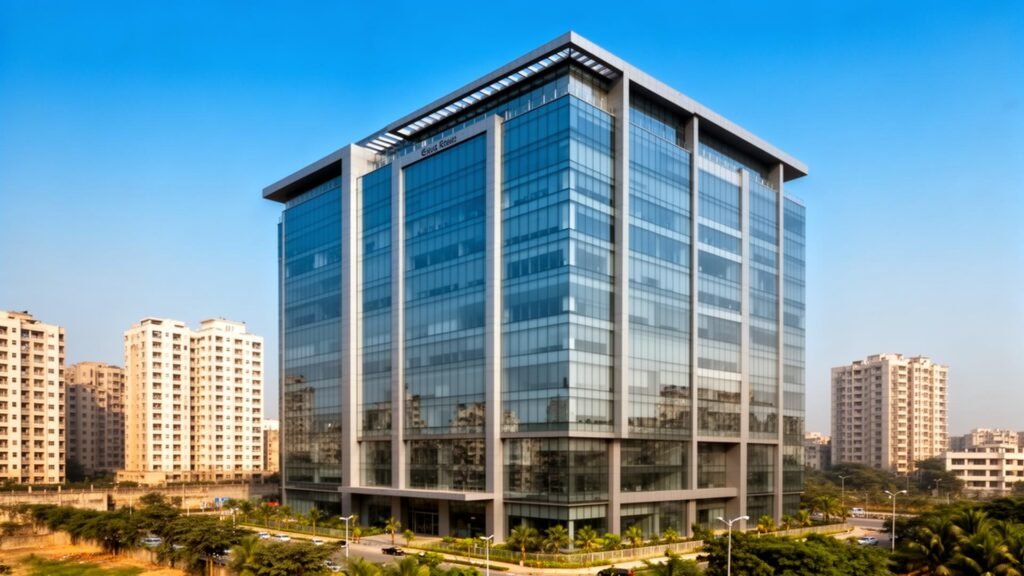
The belief that commercial property investments inherently yield higher returns than residential ones in Navi Mumbai is a common simplification, often overlooking the distinct risk profiles, capital requirements, and market dynamics of each segment. While commercial properties can offer attractive rental yields and capital appreciation, particularly in a developing economic hub, residential properties also present unique advantages and steady growth potential.
Residential real estate benefits from consistent demand driven by population growth, urbanization, and a constant need for housing. Navi Mumbai’s growing workforce, a result of its expanding commercial centers and educational institutions, ensures a steady influx of tenants and homebuyers. This sustains demand for residential units, making it a relatively stable investment. Furthermore, residential property typically requires a lower initial capital outlay compared to high-value commercial assets, making it accessible to a broader range of investors. The maintenance and management of residential properties are often less complex than commercial ones, which might involve intricate lease agreements and specific tenant requirements. Capital appreciation in residential properties, while perhaps not as volatile sometimes as commercial, tends to be more consistent over the long term, especially in well-planned areas with improving infrastructure. For example, flats in Airoli have seen sustained demand owing to its strong social infrastructure and connectivity to employment hubs. Projects like Aveon City, Airoli, exemplify the strong appeal of residential offerings in established nodes. Residential property can also serve as a dual-purpose asset, offering both investment returns and potential self-use, providing greater flexibility. Therefore, while commercial investments have their merits, residential property in Navi Mumbai offers a robust and often more accessible path to wealth creation.
Myth 7: All Real Estate Developers in Navi Mumbai are the Same, So Choose Based on Price Alone
This myth is particularly detrimental, as it assumes a uniformity among developers and advises making purchase decisions solely on the lowest price point. In reality, developers in Navi Mumbai vary significantly in terms of reputation, track record, construction quality, financial stability, and customer service. Prioritizing price above all else can expose buyers to considerable risks.
A developer’s track record is a critical indicator of reliability. Established developers with a history of delivering projects on time and within promised specifications typically offer greater assurance. Factors like the quality of construction materials, architectural design, adherence to environmental norms, and the robustness of after-sales service contribute to the long-term value and livability of a property. A lower upfront price might sometimes be indicative of compromises in these areas, potentially leading to higher maintenance costs, structural issues, or dissatisfaction down the line. Financial stability of a developer ensures the project’s completion and adherence to timelines. Customer reviews, market standing, and transparent communication are also important aspects to evaluate. For instance, reputable developers often go beyond basic amenities, incorporating thoughtful designs and sustainable practices that enhance the overall living experience. Choosing a developer based solely on price without due diligence can leave buyers vulnerable to quality issues or project delays, which can be among the significant first time homebuyer mistakes. Therefore, a comprehensive evaluation encompassing reputation, quality, past performance, and customer support, alongside price, is essential for a secure and satisfying property investment in Navi Mumbai.
Key Takeaways
- Navi Mumbai possesses a distinct identity and self-sustaining infrastructure, developed strategically as a major urban center, not merely an adjunct to Mumbai.
- Property prices in Navi Mumbai are diverse, with numerous attainable options in emerging and established nodes, catering to a wide range of budgets.
- Both under-construction and ready-to-move properties offer distinct benefits; the best choice depends on individual financial situations, urgency, and risk tolerance.
- Navi Mumbai is characterized by ongoing, robust infrastructure development, including the international airport and major connectivity projects, supporting its growth and property values.
- The real estate market is increasingly transparent, thanks to regulations like MahaRERA, making it navigable for all buyers with due diligence and professional advice.
- Residential property investment in Navi Mumbai offers stable demand and consistent long-term appreciation, providing a sound alternative or complement to commercial investments.
- Developer selection should involve thorough research into track record, construction quality, and customer service, not just price, to ensure a secure and valuable investment.
Frequently Asked Questions
Quick answers to common questions on this topic.
Yes, Navi Mumbai is generally considered a favorable location for property investment. Its planned infrastructure, ongoing development projects like the international airport and connectivity enhancements, and growing employment opportunities contribute to steady appreciation and rental demand.
Key drivers include robust infrastructure development, enhanced connectivity through projects like the MTHL, the presence of major educational institutions and corporate hubs, and the continuous influx of population seeking better living standards and employment opportunities.
Key drivers include robust infrastructure development, enhanced connectivity through projects like the MTHL, the presence of major educational institutions and corporate hubs, and the continuous influx of population seeking better living standards and employment opportunities.
MahaRERA significantly benefits property buyers by ensuring transparency, accountability, and timely project delivery from developers. It mandates project registration, disclosure of all necessary information, and provides a grievance redressal mechanism, safeguarding buyer interests.
While not strictly mandatory, engaging a reputable real estate agent can be beneficial, especially for first-time buyers. Agents can offer insights into local market trends, assist with negotiations, and guide you through the documentation process, though direct engagement with developers is also a valid approach.
New homeowners might encounter challenges related to understanding local government regulations, navigating property registration processes, or adapting to the specific commuting patterns of the region. However, these are generally manageable with proper research and professional guidance.
Established nodes like Vashi, Nerul, Belapur, and Airoli are considered prime due to their developed social infrastructure and connectivity. Emerging areas like Ulwe, Dronagiri, and Panvel are also highly sought after due to their significant growth potential and proximity to major upcoming projects.